
INTERVIEW: From the Berkshires to Broadway: Tony-nominee Ali Louis Bourzgui Reflects on The Lost Boys and His Hometown
**This article originally appeared in our June 2026 issue**
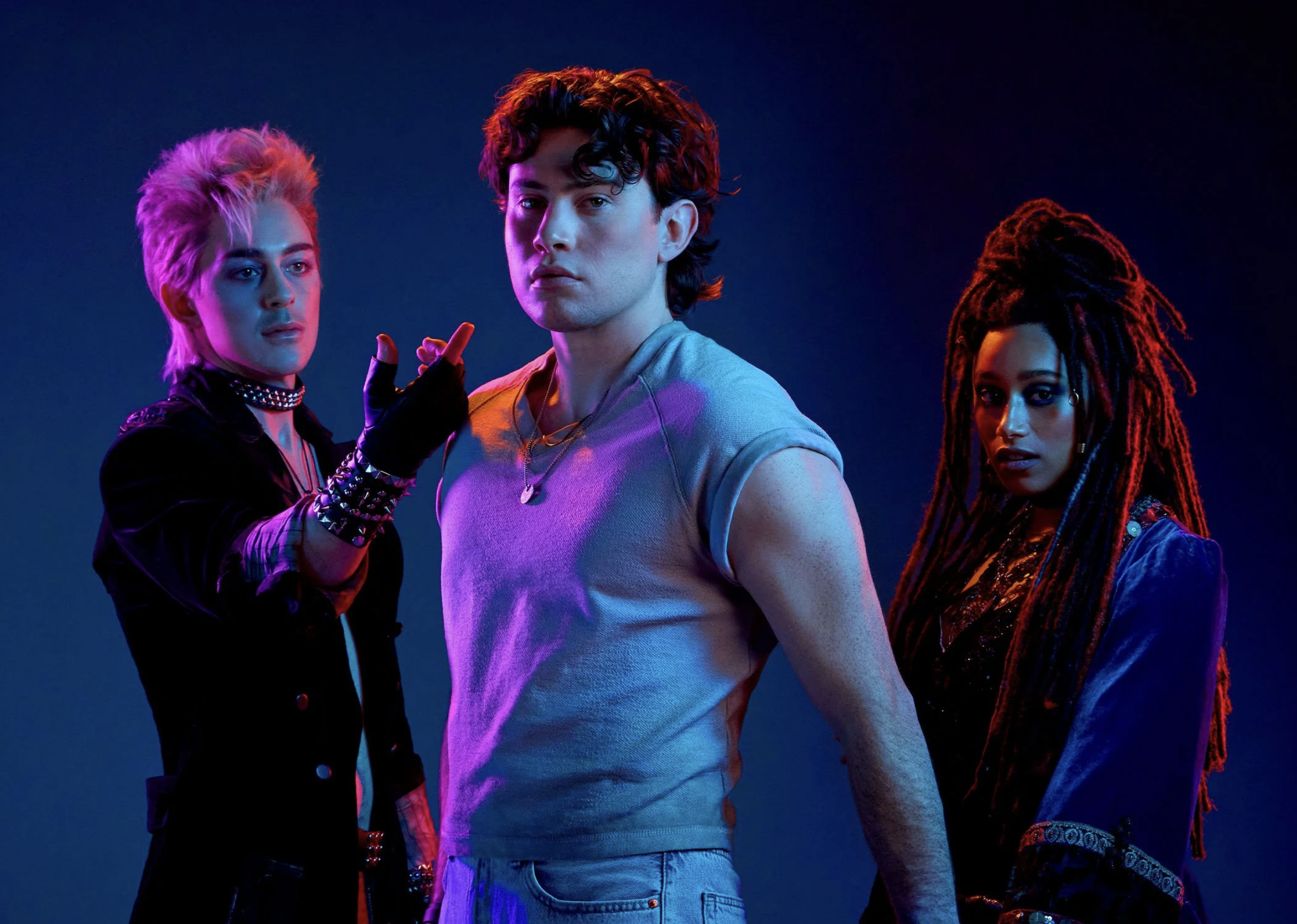
Photos by Matthew Murphy
“Anyone can come to this show and connect with the story of seeking a chosen family.”
To refer to The Lost Boys, the musical retelling of the 1987 film, as a smash hit would be an understatement. It has easily earned 12 Tony nominations and is dazzling Broadway with its rock ‘n’ roll musical score, breathtaking effects, and extraordinary cast.
Originally from Pittsfield, Massachusetts, Ali Louis Bourzgui is currently Tony-nominated for Best Performance by a Featured Actor in a Musical for the role of David. Bourzgui helped create the character for the stage; both audiences and critics have unanimously praised his three-dimensional portrayal of the charismatic vampire.
Amidst the Tony excitement, Bourzgui took the time to answer my questions, discussing his nomination, The Lost Boys, theater as a uniting force, and his Berkshires upbringing.
“It’s been the joy of a lifetime to be a part of this production’s full development,” says Bourzgui.
He joined The Lost Boys while it was still being workshopped over a year ago, allowing him to see firsthand the story evolve under the creative team’s direction.
“I’ve watched the time and total effort everyone has poured into this labor of love,” he elaborates. “For that type of process to be celebrated with commercial success means a lot. The personal nomination is something I’ve been framing as not just a celebration of my work, but the multiple communities who have helped me get here.”
He credits the people who guided him to this career highlight: friends, teachers, and his hometown mentors Lawrence Bayles, Gaylan Palmer, Travis Daly, and Ralph Petillo. He also expresses his deepest gratitude to his mother for her unwavering support, which has allowed him to reach this monumental moment.
“This kind of recognition isn’t built in a vacuum — it can only be born out of a support system of loving people,” he says. “Theater for me has always been about community and shared space.”
In the American theater, Arab performers are among the most underrepresented communities. Bourzgui has a strong connection to his Arab identity, striving to increase Arab American and Muslim representation in the media to dismantle anti-Arab rhetoric. He approaches his roles with intentionality, working to change the tide in theater and create even more “nuanced, beautiful” stories of Arab culture.
The Lost Boys is Bourzgui’s third Broadway show. He appeared recently as Orpheus in Hadestown and, in 2024, made his Broadway debut in the revival of The Who’s Tommy. Previously, he appeared off-Broadway as Amir in New York Theatre Workshop’s We Live in Cairo; Paul in the Company National Tour; Haled in The Band’s Visit National Tour; and Young Mazin/Yousif in The Goodman’s world premiere play, Layalina.
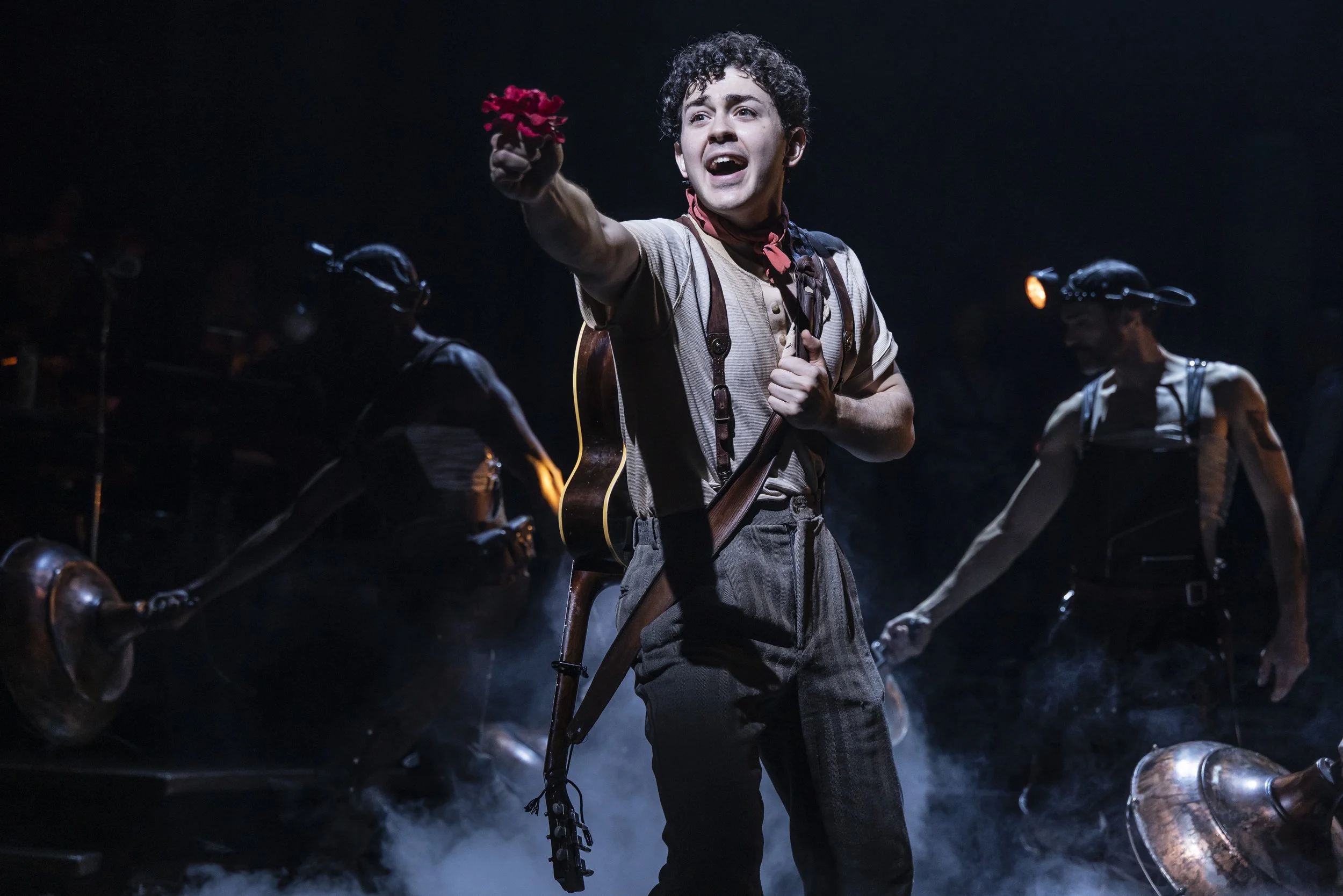
His hometown connection runs like a thread through these performances. “When I play a character like Orpheus in Hadestown, his sunshine and warmth are a direct tap into the live folk music found in every other local bar and outdoor venue and the kind people celebrating art at every corner in Berkshire County,” says Bourzgui.
The Berkshires are a gathering place for all artists, and from a young age, Bourzgui attended shows at the Berkshire Theatre Group, Shakespeare & Company, the Williamstown Theatre Festival, The Theater Barn, and the local schools.
“I always feel like there is something inherently ‘Berkshires’ about every performance I ever do,” he observes with hindsight.
After seeing Spring Awakening, he knew that he wanted to join artists in creating innovative theater. Within only a few years, he was working on productions at the same places where he had grown up seeing shows.
“Growing up in the Berkshires was the greatest gift I ever could have been given,” he affirms. “To be surrounded by so many incredible institutions of art was pivotal for me in finding my passion at a young age.”
Bourzgui’s passion flows powerfully into the character of David. This is not his first time navigating preconceived expectations; the titular role in The Who’s Tommy and Orpheus in Hadestown both had versions that preceded his interpretations. Where other actors would hesitate, the expectations only made him more excited.
“Kiefer Sutherland made the character David an iconic piece of pop culture,” he says. “His character work in the movie is so good that it was most of the reason I begged to be seen for David above all other characters.”
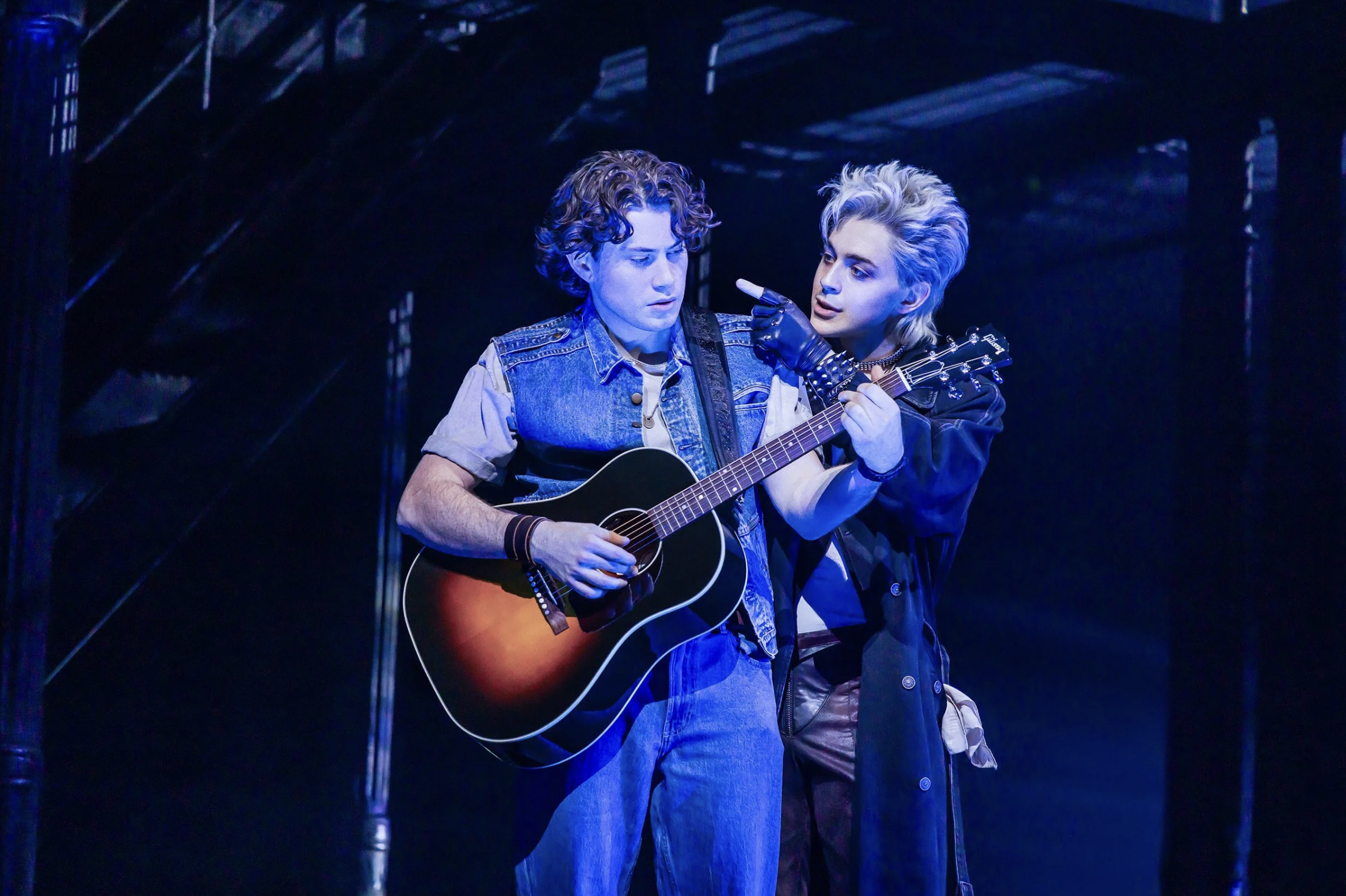
The moment that David saunters onstage, he is entirely cool, collected, and seductive to LJ Benet’s Michael Emerson, who is restless and lonely, searching for belonging in the world around him. Rather than simply being the assertive leader of the vampires, Bourzgui's David deftly alternates between vulnerable yet magnetic bravado, thrill-seeking anger and rebellion, and a profound sense of tragedy.
“I always knew I wanted to make him a full-fledged person behind the monster,” explains Bourzgui. “I created a backstory for him, figured out how long he’s been alive, what his trauma is with his family in his human life, and what he’s been running from for so long. Every person who causes pain likely had pain inflicted upon them. David is an example of how abuse can cycle.”
To Bourzgui, one of the most exciting elements that they added to the show is having The Lost Boys themselves be in a rock band, with all three of the members playing live instruments onstage. To create the ultimate vampiric rockstar, he studied Billy Idol, David Bowie, David Byrne, Tim Curry, Robert Plant, Scott Weiland, and Billie Joe Armstrong.
My take mirrors the method that the production as a whole is taking — honoring the movie, holding the parts that are iconic within our portrayal, but ultimately diving deeper into the characters at the heart of this story. We’re not interested in copying and pasting the movie; we’re reimagining the IP with some new design, new plot points, and, as with all musicals, more time to see what’s going on in these characters’ heads.
Fans of the film can take notice of special moments in the show that tributes the source material. The Lost Boys is an adaptation, yet it feels untethered to the past — paying homage but forging a new path.
“As with any known entity, you do your homework, choose the key elements to build off of, and then see where your personality, artistry, and lived experience can build upon it to create an entirely new thing that still feels comfortably recognizable for the die-hard fans,” he adds.
As the characters in the show grapple with self-identity, family dynamics, and the cycles of trauma and abuse, one of the biggest underlying themes is an aching loneliness that drives them into desperate acts. This affects Bourzgui, as someone so connected to his roots and those around him.
“Loneliness is something that humans feel no matter what age; even an immortal vampire is desperately lonely,” says Bourzgui. “Anyone can come to this show and connect with the story of seeking a chosen family.”
Bourzgui is deeply concerned by the rapidly increasing sense of individualism in society and feels that social media and phone culture are creating an isolated and anxious generation. The Lost Boys is an antidote to these tendencies.
“Our show is actively telling the story of finding a family and a community that you can share life with, that you don’t have to go through life alone if you just reach out,” he relates, noting that theater is where he feels the most grounded. “It warns us that there are people willing to take advantage of this and will manipulate your thinking if you give them the chance. But there are also people out there who will celebrate your beautiful quirks while also wanting to share in the community.”
The conversation closed with the topics that are important to him: family, art, and nature. These are closest to his heart, tracing a clear line from the lush mountains of his childhood to his singing career with his folk band Resident Lightweight. He paints a quick metaphor: when he writes music, he wants it to sound how a hike up Monument Mountain feels.
“There’s something about the community there and the way nature and love are weaved through the heartbeat of it,” he adds, in summation. “When I write music or perform a role, there is an innate compassion and vulnerability I bring, which is a direct reflection of the warmth, comfort, and kindness I was gifted by my Berkshires community in my formative years there. I take every chance I get to come home, too!”