INTERVIEW: Adam Tendler’s Inheritances: A Pianist Works Through Unexpected Grief
08/12 @ Tanglewood, Lenox MA
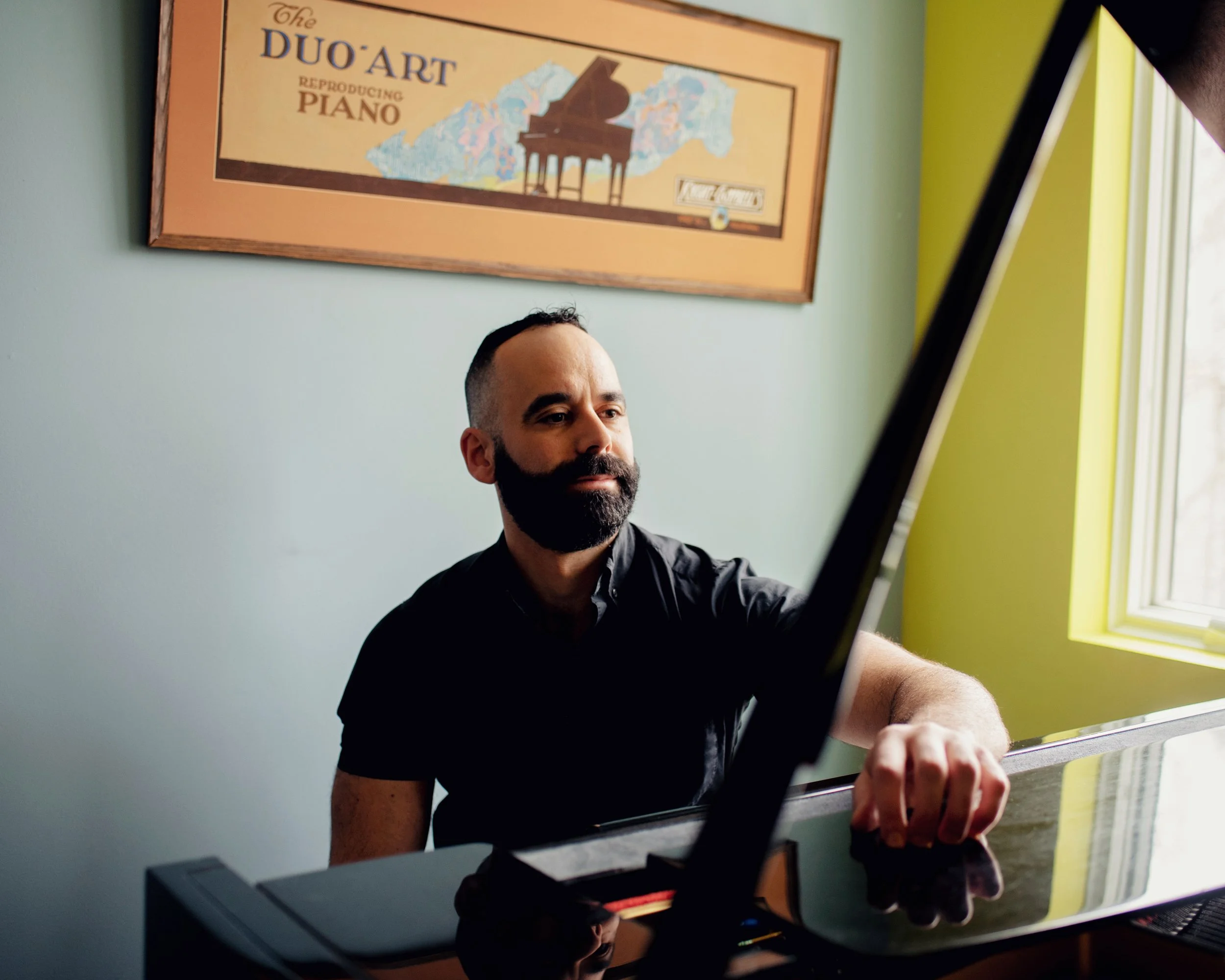
Photo by Lila Barth
“They don't train you how to feel this responsibility in conservatory.”
Adam Tendler joins our Zoom call wearing a red Dairy Creme hat and a red Dairy Creme t-shirt, repping his home state of Vermont. Sitting in an unadorned white-walled practice room in New York City, he jokes that the interview should actually be about what appears to be his favorite ice cream shop, a lighthearted beginning to our sprawling, nearly 90-minute conversation, one that belies the entire purpose of the call. He takes off the hat.
The Grammy-nominated pianist is preparing for an upcoming performance of his show Inheritances, an evening of solo piano works, at Tanglewood’s Linde Center for Music and Learning in Lenox, MA on August 12.
“In the beginning when I first started performing this program, the pieces were difficult enough, both technically and emotionally, that there really was a question of can I do it? Now, I’m very familiar with the pieces, so they're all very technically difficult, and every time I finish a concert, I always think, ‘Gosh, this program does not get any easier.’”
These days, one might expect contemporary classical music to be technical and difficult for the ear. Emotional, though? That is Inheritances’ greatest asset.
On New Year’s Day, 2020, in the parking lot of a Vermont Denny’s, Tendler’s stepmother handed him a manila envelope filled with $10,000, an inheritance left to him by his late father who died unexpectedly three months earlier. And while he was shocked by his father’s passing — despite the fact that their relationship had been waning for many years — the inheritance’s manner of delivery, “a wad of cash,” as Tendler describes it, was to him unsurprising. “[It] spoke to the kind of cut and dry…detached-in-a-way nature of our relationship in my adulthood,” Tendler continues in a matter-of-fact tone that suggests years of reflection on the matter.
After considerable thought, Tendler decided to use the money to commission new pieces of music, at first from his close friends who happen to be some of the biggest and most interesting names in contemporary composition: Nico Muhly, Christopher Cerrone, and Timo Andres. He later expanded the project, commissioning a total of 16 works, the final track list for which reads almost like a study guide for 21st-century classical music, with pieces by Missy Mazzoli, Pamela Z, Ted Hearne, Devonté Hynes, and Laurie Anderson, among others of equal prestige. With no limitations on style or character (“I trust your instincts [to take] the piece in any direction you choose,” Tendler wrote in his initial email to the composers), the result is a strikingly diverse concert program (and now a Grammy-nominated album) that serves as both a “bona fide contemporary music recital” and a therapeutic experience for both the audience and Tendler.
“I kind of embarked on the journey of Inheritances for very personal reasons. I just need[ed] to figure out a way through this grief or even a way to activate the process of grief because I was so numb,” recalls Tendler with a hint of exasperation. Even after his many interviews about the project (including a segment on CBS’ Sunday Morning and a self-authored reflection in the New York Times), he is still able to access his emotions from the earliest conceptions of the project. And this is, perhaps, what anchors the project: Tendler’s ability to go there, so to speak, navigating a slowly undulating musical river that takes both the musician and the audience through a wide, almost encyclopedic range of moods: from pensive and rational to unabashedly mournful and even violent. Tendler categorizes his role on stage as more than just a pianist.
“It's a very communal experience. Part of that arc involves sort of wearing the listener down so that they're vulnerable for some real shattering moments that happen later in the program. My job is to be able to sort of steer the bus and make sure that we are all going to stay on this road together.”
Having performed the program many times over the last four years, he continues, “It doesn’t get easier.”
“But would you want it to be easier?” I ask.
“No. No! I’m glad it’s not,” he answers definitively. “It means that I'm still doing it right.”
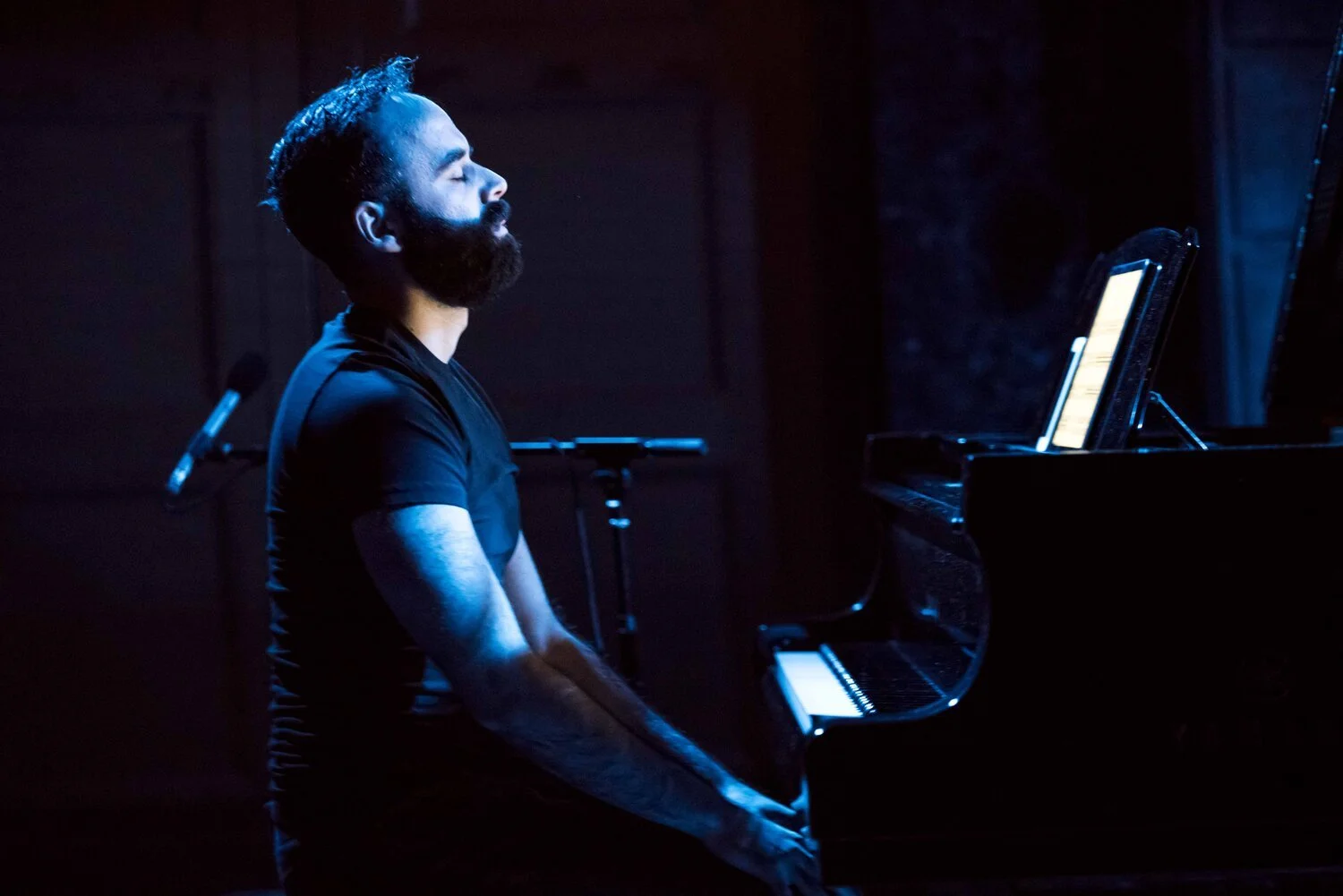
Photo by Cameron McLeod
Still, while the concert carries all the tension and release of a theatrical production (the live show even features home movies from Tendler’s childhood captured by his father), the program reaches beyond music with strong undertones of themes from contemporary life. “I often say that this program sort of explores grief through a queer lens. That might just be me who's playing the piano and maybe I'm just a queer person, but a lot of the composers are, too.”
Tendler is candid with me about the role politics played in his gradual estrangement from his father. “‘I know more than you do about what's going on here in this world,’” he declares, acting out how his father might have seen himself in relation to his son. Trump’s first election immediately strained their already-tenuous relationship; Tendler couldn’t reconcile his father’s affinity for Trump while also having “a gay son who's gay married, and has chronic health problems.”
Hints of the Manosphere aside, Tendler is careful about how Inheritances frames his father, especially considering that the man can’t speak for himself. “I’m sensitive to…avoid this feeling like a hit piece. He wasn't an aggressive or hostile person in any way. It's just more complex. I think we both share the burden of the imperfection of the relationship.”
This idea of a complex legacy is one that also shows up in the music itself. Muhly’s contribution to the project, Eiris, Sones, takes inspiration (and text) from a 14th-century Middle English version of Proverbs 13:22 that translates to, “A good man leaveth an inheritance to his children's children, and the wealth of a sinner is stored up for the righteous.”
While the initial bequest was left to Tendler, a parting gift from father to son, it is no stretch to say that the pianist’s audiences — whom he describes as the intersection of “music geeks, fathers, and gay dudes…people who are there for incredibly personal reasons” — are the biblical grandchildren here, afforded the space to have their own catharsis, processing their own relationships in a space where, in the pianist’s words, they can “feel held and seen.”
Tendler reports that while audiences have had a variety of reactions to the program, he’s always left humbled by those who share their own paternal stories with him. "At the end of the day, I'm really just a pianist who's playing these pieces. They don't train you how to feel this responsibility in conservatory, but it's an amazing thing. It's what I hoped would happen, to be honest.”
At the end of our call, Tendler jokes that his standard concert attire featuring a tight black t-shirt (he is noticeably muscular) can be really helpful in attracting the aforementioned gay dude contingent to his performances. This remark, how he easily moves toward denouement after what was admittedly a rather heavy conversation, speaks to his ability to take care of others, knowing a laugh must be had after a foray into the depths of the psyche. Should you attend Inheritances on August 12, know that you too will be (pianist pun aside) in good hands.
For tickets and more information, visit https://www.bso.org/events/aug-12-tli-presents-adam?performance=2026-08-12-20%3A00