ALBUM REVIEW: A Track By Track Walkthrough of Sova’s Alight!

Photo by Kiki Vassilakis
“Plans have been laid for battle and Sova is a general pointing to Xs and Os and dotted lines that connect them all on a map pinned to the wall; us, the listeners, are seated at desks, attentive to her precise commands.”
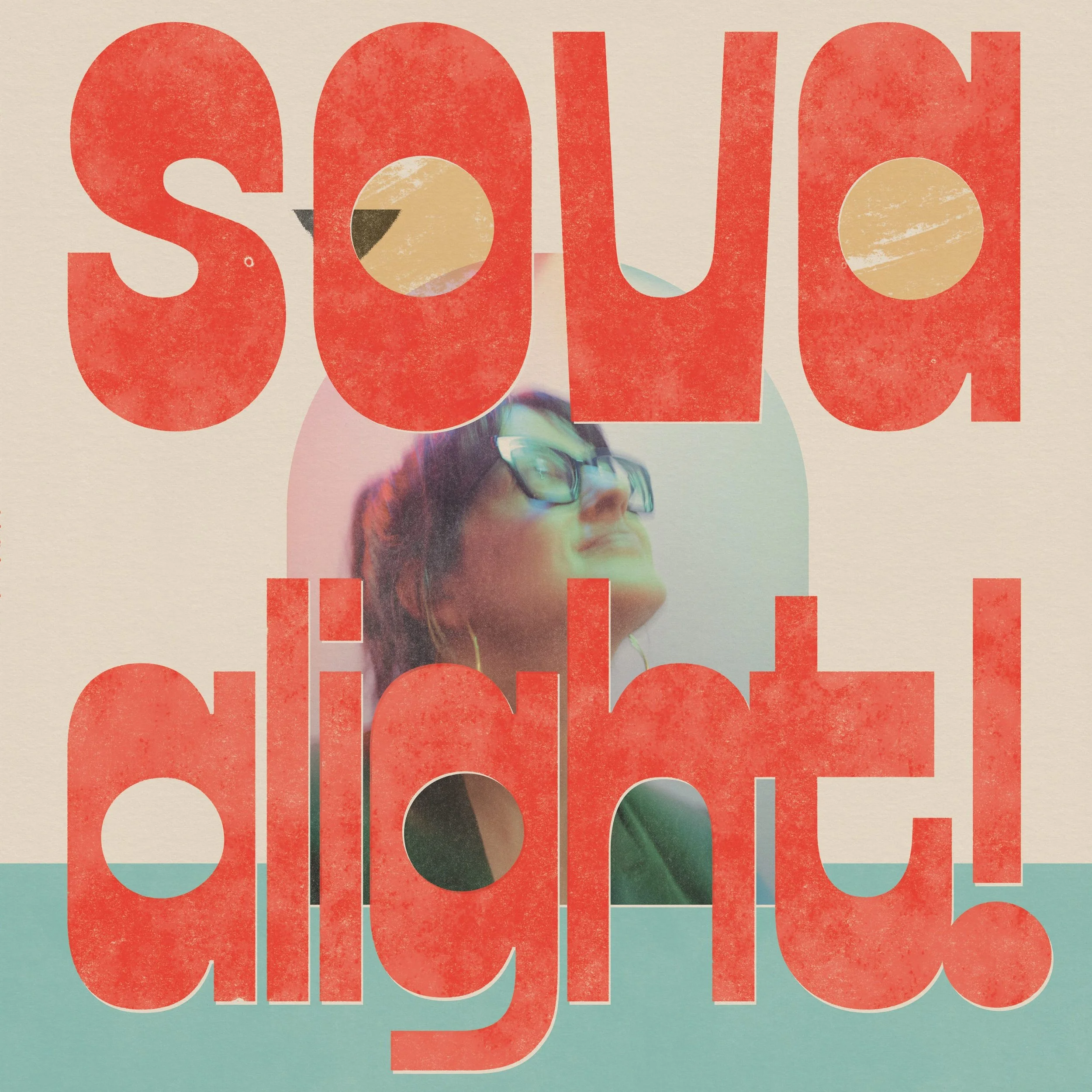
Capital Region composer and pianist Sova’s new album, Alight!, finds the artist in collaboration with a small band of other musicians to produce nine instrumental tracks that navigate across a variety of genres and moods. It is a haunting collection of works that will have the listener reflecting on everything big and small: the state of the world and their own day-to-day goings-on. Here’s a track-by-track breakdown and review of what is a thoroughly enthralling, yet concise 35 minutes of music.
TRACK 1: “Heavy Shit” - The album’s opening track is true to its title. Thick, bass-heavy piano chords pull no punches. Glossy fretless bass offers short responses. Mid-register cello enters soon after with a legato ostinato: alternating tones of a perfect fifth. Layers continue to build upon the piano’s pedal tones, creating a sense of expanded time and allowing the string harmonics and drums to creep imperceptibly into the jam. Harmonically, Sova’s modal mixture gives rise to an uneasiness, traversing major and minor tonalities as this introductory track sets the scene for the drama to come on the rest of the album (take note of this piece’s title).
Halfway through the tune, the ♭II chord is a welcome surprise, as are the groove played on the snare rim and the highly distorted electric guitar that almost sounds like a synth (or is it a synth? the timbral interplay, not quite knowing what’s playing what, adds to the uneasiness). The left hand of the piano gets more aggressive while never getting muddy, a credit to the production team (Sam Torres, Chuck Johnson).
To end, the beat breaks down for suspended, not-quite conclusion before segueing directly into the next composition.
TRACK 2: “Hum” - The first sounds heard after the opening chord are the pedals and hammers of the piano, perhaps even brought to the forefront of the mix. It’s wonderful to hear the literal nuts and bolts of the instrument because whereas the ominous vibe of “Heavy Shit” might create a distance between the music and the listener, hearing the machinations of the piano draws the listener in, almost inviting them to sit down at the bench next to Sova for this intimate experience.
Following a brief noodle on the keys, a repeated 16th-note idea emerges, establishing a pedal-tone motif that can be heard across the album. Sova does an incredible job creating a certain stasis around which the rest of her musical world changes. (Oddly, I’m reminded of all those late-90s music videos where the singer lip synchs standing still but the rest of the world whizzes by them at 10x speed; I’m thinking Madonna’s “Ray Of Light.”)
The groove on “Hum” is infectious. With Sam Torres (Sova’s husband and musical partner) on saxophones, the tune is jazzy and features melodic figures that come in and out amidst wisps of saxophone licks. At times, it has the heaviness of a Tigran Hamasyan track without the rhythmic chaos that might otherwise encumber the listening, and seeking instead to immerse the listener in the world that Sova and her band are constructing around them. “Hum” is less about a hummable tune than it is about the hum of city life, a constant buzzing of intertwining business and personal obligations that the groove—built on a foundation of those 16th notes—embodies.
The track begins as it ends, with the solo piano and its machinery clacking away, like what we’ve just heard was us being let in on confidential information. Plans of some kind. More on that later.
TRACK 3: “Hymn for Slowing”
With a title that evokes Sova’s 2022 EP, In Our Softening, track 3 expands the harmonic complexity. Beginning like an improvisation (again including the chattering of the piano), the two saxophone voices (one in echo at the back of the mix) layer in with legato gestures. If this is a hymn, then we are still in the Introductory Rites portion of the Alight! mass, as piano and sax offer their prayers inside a world filled with the aforementioned “Heavy Shit.” It’s as though that shit is what this prayer hopes to ward off. After these interwoven rubato lines have concluded (the musicians now getting up from their kneelers and returning to their seats in the pews), the recording ends with 18 seconds of room tone, recontextualizing what was at first a hymn incanted in optimism now as an elegy for a world perhaps too far gone, overburdened with shit.
TRACK 4: “Through The Smoke We See Each Other”
And yet, as if Sova took a night to sleep on it, “Through The Smoke We See Each Other” immediately pivots and offers a dreamy rebuttal to the resigned pessimism of “Hymn.” Quick triplets in perfect fourths and major seconds shift in and out of time, finally giving way to a more complex rhythmic structure. The inner gadgetry of the piano (which is now starting to feel like an old friend) is still heard as a percussive, homophonic counterpart. Staying in the treble register, Sova’s nimble triplets melt into a wash of reverb (perhaps the titular “smoke”) before suddenly and quizzically turning dry, the piano’s insides sounding almost like snare drum rim play.
Toward the end of this solo piano adventure, a resounding bass note tolls, and then, through the dissipating smoke, you can just make out a few bars of faint “oohs” and “ohs” of Sova herself singing. The piece ends without fanfare, the cooing left answered by further keyboard noodling.
TRACK 5: “Quarry”
An open-voiced piano arpeggio is paired with the syncopated counterpoint of cello pizzicato (Clarice Jensen). There is a curiosity about this opening. In my mind, I’m imagining someone rummaging through old city records or someone returning to their childhood home to see what the new owners have done with the place. The music asks questions; sax and strings enter with long tones on tight diminished chords, contrasting with the openness of the piano’s voicing, providing no answers.
Speaking of imagery, the constant motion of the piano and the visions evoked by the title of this selection remind me of composer Meredith Monk’s 1975 silent black-and-white short film, also titled Quarry. One shot in particular from that film shows workers emerging from and scaling across an immense pile of boulders. Their relatively tiny bodies—which I liken to Sova’s fast notes—are nearly subsumed by the geological heft which surrounds them, the same heft heard from the saxophones and strings. (Sova’s initial arpeggiations could, in fact, be dropped right into an early 80s Monk song cycle and no one would be the wiser, so the comparison of visuals feels apt.) Sova’s music video for “Quarry” finds Sova wandering the aisles of a large surplus warehouse lined with layers and layers of old wooden doors and windows pulled from their hinges and frames, rendering the composer tiny inside the vastness of the warehouse. Monk’s film was a response to governmental propaganda from WWII, and it’s impossible to not also see Alight! as a response to the current American situation. If Sova’s “Quarry” is a meditation on that, then the title suggests a kind of collectivism necessary to counteract—no, resist!—the daily barrage of (forgive me) shit.
TRACK 6: “April 20”
Can I be forgiven for thinking that this piece would be a musical joke about weed? No? Oh well.
The slippery, oozy fretless bass (Spencer Zahn) definitely gives off the vibe of a certain kind of intoxication. Through a melting of sound coming from the low strings and muted piano stabs, I was transported to the backroom of a dark club, a welcome detour from the trek the musicians had been leading me on up to this point. It is on this track that Sova and her band lean more enthusiastically into the modal jazz/jam-band aesthetic they’ve been hinting at on the previous five tracks. No doubt that every song on Alight! has been carefully crafted. But when the calendar page flipped to “April 20”—every articulation of which giving less the impression of having come from the pen and more of being handed down from the ether and pumped through the musicians’ hearts and out their fingers—I was able to let the track’s river of sound wash over me and really shift my attention to the quality of these musicians’ performances. And they are stellar. Clocking in at not-quite three minutes, “April 20” offers a momentary and welcome respite from the album’s more solemn and, at times, threatening sensibility thus far.
TRACK 7: “The Owls Are Not What They Seem”
Oh, god, something’s coming. Between low, murky bass triads, Sova offers feathery, portentous treble gestures. The composition affords ample space to appreciate the wide reverberation of these fleeting warnings for nearly a minute and a half. And then Sova’s signature ostinato reappears. This time, the single repeated note is nearly without pitch, the strings of the piano muted to such a high degree, reminiscent of the prepared piano works of John Cage. A struggle is evident as Sova seems to be fighting with her own instrument, begging for it to sound. But the piano is winning. If “April 20” was the calm before the storm, “The Owls…” is the first crack of thunder and lightning. Plans have been laid for battle and Sova is a general pointing to Xs and Os and dotted lines that connect them all on a map pinned to the wall; us, the listeners, are seated at desks, attentive to her precise commands. The battle plays out in slow motion. The rains come down harder. Soldiers everywhere, trudging through the mud. The ostinato continues with rich, close harmonies overlayed atop the plaintive groove. Many are lost, but Sova keeps fighting, depressing the singular piano key in rapid succession until the dissonant warnings from before become too much. The harmonies disappear. The campaign is over. The owls have won…
TRACK 8: “Burn”
…for now. A pad of synths opens this track, followed closely, once again, by the piano’s triplets. A bass drum pounds heavy and loud and Sova’s left hand joins in suit. It’s not difficult to imagine this piece as a soundtrack for the last remaining soldier using whatever strength they have left after the battle to set fire to the Owls’ camp, throwing a match at their tents and fleeing (the film now in slow motion) as, behind them, their winged rivals wake up to fires blazing, realize what’s occurred, and grab their guns in immediate pursuit. It is a last ditch effort against whatever enemy you want this album to be about that is thwarted about as swiftly as it was brought to bear.
TRACK 9: “Vast”
The album’s final track is a meditation. Solo piano, slathered in a wealth of reverb, is still deftly captured by the recording team. This lush resonance, combined with the crisp percussiveness of the piano’s pedals and hammers (with maybe a creaking of the bench and fingernails tapping on keys), suggests a confluence of two worlds: while the block chords of the keys moving in parallel motion symbolize an almost utopian optimism or a tendency to romanticize, the shifting and creaking of the piano’s innards function as a reminder of our own flesh and bones, our mortality and inability at times to achieve all we hope for. Much credit must be given to the close relationship between Sova and her recording and production team whose clean mixing and mastering has allowed this imagery and symbolism to be so accessible to the listener. Sova describes her approach to this album as “world-building,” and to that end, she does achieve what she set out to create: an expansive, immersive listening experience that mythologizes and exalts the world we live in while simultaneously painting an accurate, un-airbrushed portrait of modern life with its global crises and daily encumbrances.
***
Alight! is both a complete cycle of pieces with a traditional arc of musical narrative and, curiously, a set of nine works that could easily be the second-halves of an equal number of tracks. In my many listens through this album, I couldn’t shake the desire for it to be twice as long, for every motif to be developed further to their nth degrees. Similarly, I would love to hear what three-to-four minutes of music might precede each piece. (And I do think wanting to listen longer is really saying something about what Sova has crafted in this era of two-minute radio hits and 15-second viral sounds.) There were also times when my ear craved a melody-proper, something to offset all of the album’s irresistible grooves and suave harmonic changes. None of that, of course, detracts from the fact that each of Alight!’s compositions is complete. They are nine discrete units that when listened front-to-back are so incredibly well-executed and evocative (speaking to the sociopolitical undercurrents of our everyday lives) that they have me imagining all sorts of what-ifs and wanting more. Sova’s unique compositional style—which squeezes itself in between ambient, classical, jazz, and new age genres—is wonderfully fleshed out on this album. All said, Alight! presents both familiar sounds and extended techniques that are sure to satisfy fans of the artist’s earlier work and captivate newcomers to her music.